
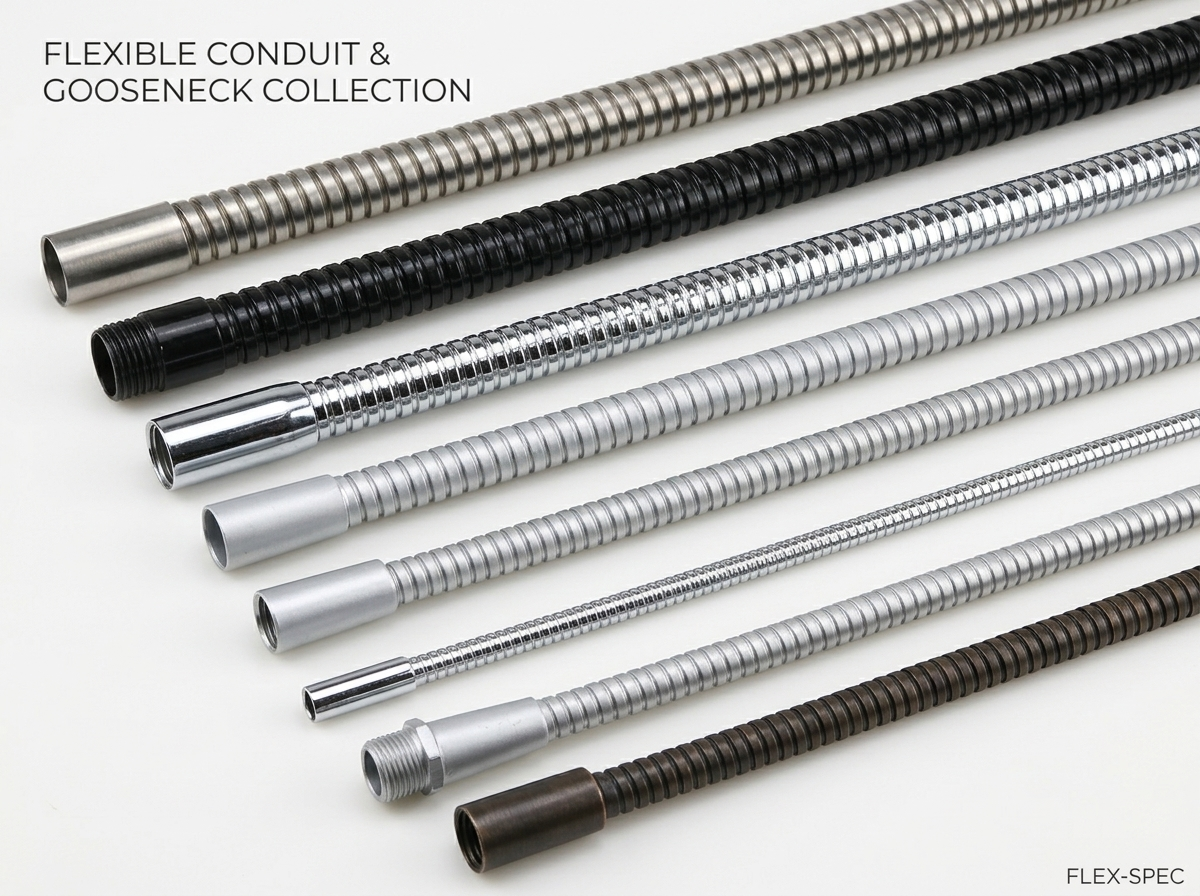
In modern industrial manufacturing, medical equipment, and even our daily office and live-streaming setups, there is a seemingly inconspicuous yet vital accessory: the Flexible Arm (also known as an articulating arm or gooseneck). Whether precisely positioning a high-power microscope or supporting a microphone and tablet, flexible arms have become an indispensable tool across various industries due to their ability to be "positioned anywhere, yet remain rock-solid."
As a professional provider of flexible mounting solutions, Flexiblearm.com is here to provide an in-depth analysis of the core principles and primary application scenarios of flexible arms, along with a comprehensive guide on how to choose the perfect product for your specific needs.
A flexible arm is a mechanical support device that can bend and rotate freely in a three-dimensional space and maintain its set posture once positioned. Depending on their internal structure and working principles, they are mainly divided into the following types:
The applications for flexible arms are incredibly diverse, covering almost any scenario that requires "hands-free" operation and "precise positioning":
In operating rooms and dental clinics, doctors need to position surgical lights, endoscope displays, or ventilator tubes at specific, critical angles. Medical-grade flexible arms utilize anti-microbial coatings and rust-proof materials, providing a silent, smooth adjustment experience to ensure absolute precision during procedures.
On automated production lines, machine vision systems (cameras, scanners) and sensors must be accurately mounted next to conveyor belts. Industrial Articulating Arms can not only bear the weight of heavy equipment but also resist machine vibrations in factory environments, ensuring zero errors in inspection data.
For photographers and content creators, a "Magic Arm" is an essential tool. It securely mounts fill lights, field monitors, and microphones to camera cages or desk edges, helping creators build the perfect studio setup.
For individuals with limited mobility, flexible arms can position wheelchair control panels, communication devices, or tablets in the most comfortable locations, significantly improving quality of life and daily convenience.
The useful question is not whether an arm looks flexible, but whether it holds the device in the position your user needs. Before choosing a gooseneck arm, check these practical points:
When shopping at Flexiblearm.com, we recommend considering the following four key parameters before placing your order:
A flexible arm is a small part, but it affects how the final product feels every day. Start with the load, reach, mounting method, environment, and how often the user will adjust it.
If you already have a drawing, sample, or target device weight, send those details first. We can help decide whether a standard gooseneck tube is enough or a custom diameter, fitting, or finish is needed.