
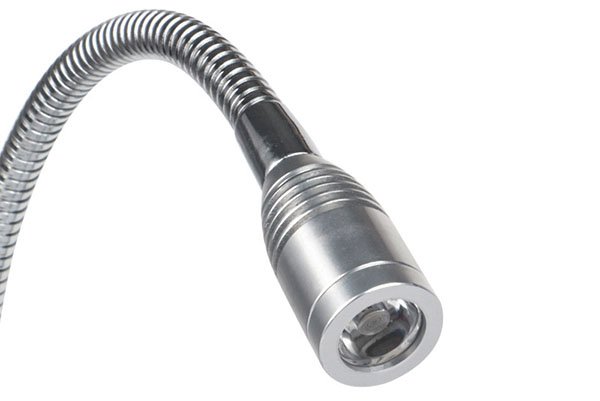
A gooseneck arm that sags is frustrating because it usually looked fine at first. The sample held position on the desk. The first bend felt firm. Then, after a heavier head, longer reach, or a few weeks of use, the arm slowly started to drop.
Sagging is rarely caused by one thing. It is usually a mismatch between load, length, stiffness, bend shape, and base design.
The mounted part has weight, but it also has leverage. A small lamp head close to the arm may be easy to hold. The same weight extended farther out can create much more bending force.
This is why working length matters. A long arm for a tablet, scanner, or medical light cannot be judged by the feel of a short sample. Test it at the real length with a realistic load.
A tight bend can look neat in a product photo, but it increases local stress. If users repeat that bend every day, the arm may lose holding confidence faster than expected. A smoother bend with a larger radius usually gives better service life.
If the product requires a sharp direction change near the end, consider using a short rigid fitting or bracket instead of forcing the whole shape into the flexible tube.
Sometimes the gooseneck is blamed when the base is actually moving. A clamp may slip. A thin mounting plate may flex. A weighted base may be too light for the reach. A magnetic base may work on one machine surface and fail on another.
For this reason, heavy-duty applications should be reviewed together with mounting bases and clamps, not tube stiffness alone.
Machine tools, vehicles, industrial lighting, and outdoor equipment put more stress on the arm than a clean office desk. Vibration can slowly move a marginal arm out of position. Oil and cleaning chemicals can affect covers and fittings. Heat may change the feel of some outer materials.
An oil-resistant CNC gooseneck is designed with a different environment in mind than a bedside phone holder.
An arm that is adjusted once a month can be stiffer than one adjusted many times a day. Frequent adjustment introduces wear, user force, and changing bend shapes. If people need to move the arm often, choose a stiffness that users can handle comfortably while still holding the load.
A good gooseneck arm is not simply the stiffest one available. It is a balanced assembly that holds position in the real product, with the real load, in the real environment.